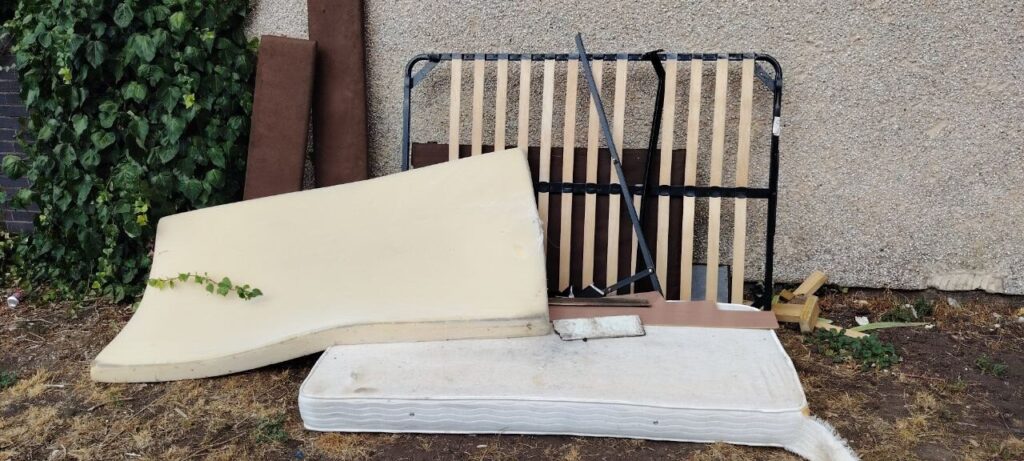
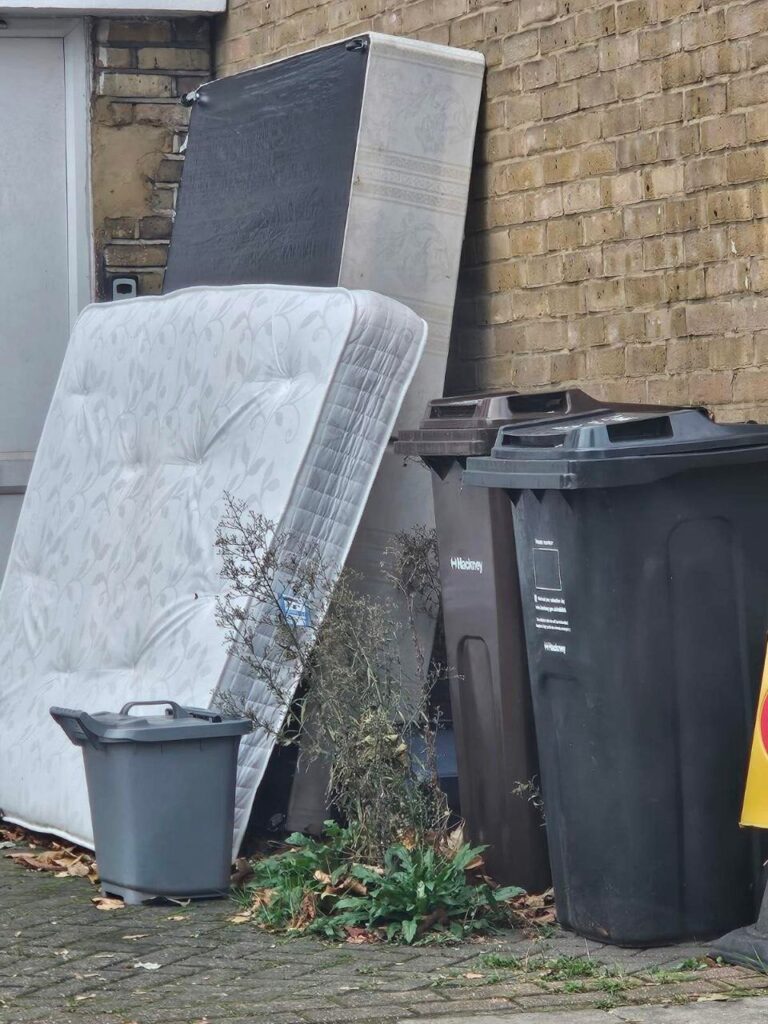
A discarded mattress, bed base or headboard outside a house can make you wonder whether there are bed bugs next door. It’s a possible clue, but the furniture may simply have been put out for collection after a move or a replacement. Even if the item was infested, seeing it on the pavement tells you little about which property it came from or whether bed bugs have reached your home.
Why discarded beds can carry bed bugs
Bed bugs hide in tight spaces near where people sleep. Mattress seams, the joints of a bed base and gaps behind a headboard can all provide shelter. Bugs and eggs can travel with infested furniture when it is moved. Leave discarded mattresses, bed bases and headboards where they are, even if they look clean. Gravesham Borough Council’s bed bug guidance explains where to look and how to avoid spreading the insects when handling affected items.
Can bed bugs spread between terraced houses?
Yes. In terraced and semi-detached houses, bed bugs can sometimes reach an adjoining home if there is a route through gaps around shared walls or service openings. Infested belongings can also carry them between properties. If an infestation is confirmed next door, it is reasonable to check the areas where you sleep and ask a pest controller whether an inspection would be useful. The layout of the building and any physical evidence help determine which areas to check. East Lothian Council’s guidance on nearby infestations covers spread between terraced houses and flats.
What about a block of flats?
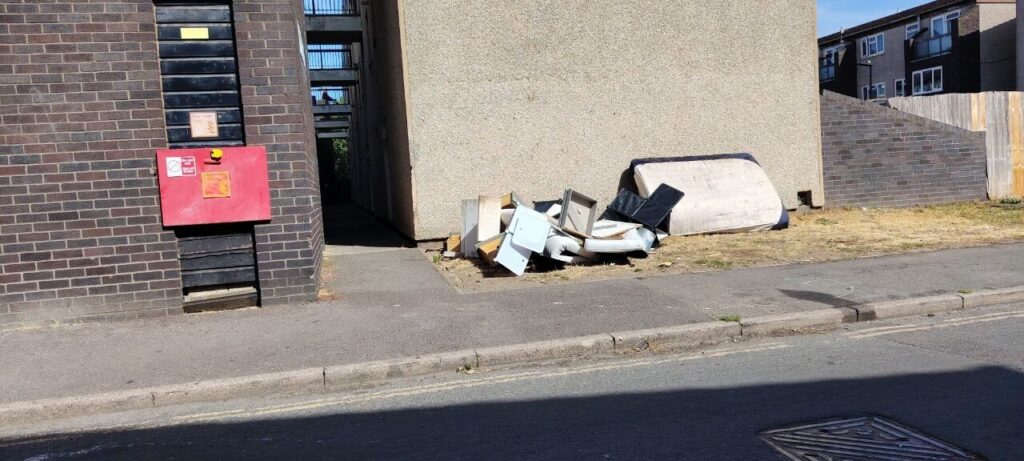
In a block of flats, a mattress left beside the bins may have come from any of several homes. If bed bugs are confirmed in one flat, the landlord or building manager can help co-ordinate checks in nearby flats. An inspection may need to cover homes next door, above or below, depending on the building and what the pest controller finds. A field study of bed bug movement between flats documented movement both between floors and between homes on the same floor.
What to check in your own home
Use a torch to look along mattress seams and around accessible bed-frame joints and headboard edges. Look for live insects, pale eggs, shed skins or clusters of small, dark spots. A stain on its own can have several causes, and bites alone cannot confirm an infestation. Photograph anything suspicious and note where you found it so a pest controller can assess it.
If you have only seen a mattress outside and have found no signs at home, there is no reason to start spraying or replacing furniture on that basis. If you find physical evidence or learn of a confirmed infestation in an adjoining home, read our guide on when to arrange a bed bug inspection. If you rent or live in a managed block, tell your landlord or building manager what you have found so they can consider whether nearby homes should be checked.
If you need help identifying signs or deciding on the next step, see our bed bug control services in London.
continue reading


